Showing posts with label Honda. Show all posts

Wednesday, October 15, 2008

2009 Honda Pilot vs. Ford Flex, Chevy Traverse, Hyundai Veracruz, Mazda CX-9, Toyota Highlander

2009 Honda Pilot vs. Ford Flex, Chevy Traverse, Hyundai Veracruz, Mazda CX-9, Toyota Highlander - Beat of a different Drummond: We compare six family haulers and, amazingly, drown none of them.

BY JOHN PHILLIPS, PHOTOGRAPHY BY AARON KILEY
November 2008


When we last visited Michigan’s Drummond Island [“Mud Puppies,” February 2008], we compared nine Lilliput SUVs and quickly found ourselves in over our heads. Which is to say, we sank a Jeep Liberty. See, the island—a short ferry ride from the eastern tip of the state’s Upper Peninsula—is a 25-mile-long series of limestone bowls (which hold water) and cedar swamps (ditto) surrounded by Lake Huron (ditto times a million). Drummond Island, thou art thine own soggy enemy.

This time, we asked Drummond Island Resort’s driving expert, Craig Hoffman, to sketch out a somewhat drier 16-mile loop, two-thirds of which comprised twisty, smooth pavement and one-third of which bumped through the resort’s private off-road facility. On any off-roader’s scale of difficulty, these private trails (notice we said “private” twice?) hover wholly in Wally Cox territory yet still represent pretty much the worst that any owner would throw at his investment. Along this route, we then ran the vehicles back-to-back until the local bowling alley’s neon “BEER” sign lit up.

http://www.caranddriver.com/reviews/comparison_test/crossovers_and_suvs/2009_honda_pilot_vs_ford_flex_chevy_traverse_hyundai_veracruz_mazda_cx_9_toyota_highlander_comparison_test

Friday, September 7, 2007

Honda Accord Coupe EX V-6

Honda Accord Coupe EX V-6 - Like anyone else, we appreciate high quality, flawless road manners, smooth power, and a solid value story. But we also value passion. And that EX four-door was exactly as passionate as Lt. Commander Data running a routine systems check on the bridge of the Enterprise.

Which brings us to the Accord coupe. Properly equipped, with the V-6 backed by a manual transmission, it raises the Accord's EQ (“emotional quotient”) by a large order of magnitude. Quicker on its feet, quicker straight ahead, quicker to provoke smiles at the helm.

The key elements of this character shift—tires and transmission—aren't very mysterious, but they combine to make this particular Accord unique among its stablemates. The EX four-door rolls on Michelin Energy MXV4 P205/60VR all-season tires, wrapped around 6.5-by-16-inch aluminum wheels. Our EX two-door tester came with a set of Michelin HX MXM4 P215/50VR Pilots on 7.0-by-17-inch wheels. The Pilots are also an all-season design, but bigger footprints and shorter sidewalls produce better grip—0.82 g versus 0.74 for the EX four-door—as well as better braking performance: 181 feet from 70 mph versus 209.

The EX breaks with this tepid tradition. For the first time in the Accord's long history, V-6 and manual transmission are not mutually exclusive concepts, and the six-speed's precise engagements and short shift throws enhance the pleasure of piloting this rig by a bunch.

They also enhance performance. With a five-speed automatic sending power to its front wheels, the EX V-6 four-door needed 7.0 seconds to reach 60 mph and covered the quarter-mile in 15.5 seconds at 92 mph. The six-speed two-door hit 60 in 5.9 seconds and hustled through the quarter-mile in 14.5 seconds at 98 mph. Although the coupe did weigh 140 pounds less than the sedan, that's still a pretty strong testimonial for the efficiencies of a standard transmission. We should also add that the Accord manages to deliver the engine's substantial output to the drive wheels with only the barest hint of torque steer. This is not your father's Saab 9-3 Viggen.

It would be lovely if Honda also offered the CL's limited-slip differential for the EX two-door. After all, the CL won't be needing it anymore, having joined the ranks of the dearly departed. But with or without that enhancement, the six-speed EX V-6 package ranks as just about the hottest ride in the mid-size, subluxury coupe class.

It may not eliminate our mourning for the old Prelude. But it does stimulate the driver-gratification glands.

Thursday, September 6, 2007

Honda S2000

Honda S2000 - We have more bad news for those guys. There's a revised S2000 coming their way as a 2004 model, and it features a ton of improvements designed to neutralize the few criticisms we had about the old car.

Both VTEC cam profiles were reconfigured, the compression ratio was raised a 10th (to 11.1:1), and the redline was dropped from a strident 8900 rpm to a merely maniacal 8000 rpm. The redline illuminates as a shifter light on the tidy new instrument cluster and then allows another 200 rpm before shutting off the fun.

With the same horsepower, the '04 car runs similar 0-to-60-mph and quarter-mile times but aces the '03 model in the 30-to-50-mph and 50-to-70-mph top-gear passes, running 8.8 seconds versus 9.9 and 7.9 seconds versus 9.4, respectively. That's quite remarkable, particularly since sixth gear in the new S2000 is actually now two percent higher. (First through fourth are four percent lower, for better acceleration, with fifth just one percent lower.)

Along with the gearing revisions is a change to carbon-composite synchronizers, allowing the use of double-cone rings where there were triples, and singles where there were doubles, lightening engagements and smoothing the whole process. It was a pretty magnificent gearbox before, so you can imagine how slick it is now. Think snick-snick with a dab of Vaseline.

We didn't think there was much wrong with the previous car's handling, but this one got around the Bragg-Smith racetrack at Pahrump, Nevada, at least as quickly as its '03 forebear, and with a pleasing lack of body roll or power oversteer to boot. (New readers note: That's when your right foot mysteriously steers the rear axle.)

Larger 17-inch wheels with bigger-cross-section, lower-profile tires aid the new suspension setup. They're Bridgestone Potenza RE050s: 45-series 215s in front, 40-series 245s out back; and if you're squealing these tires out on the public road, well, you should be grateful for the new, stable chassis. We couldn't run skidpad tests because our usual venue had just been resealed with shiny, slippery black goop, but we'd guess a 10th or two up on the '03 model's already respectable 0.92 g.

Best of all, though, is the fact that you can now cruise the freeway in sixth gear and cut a swath through the antidestination leaguers without even downshifting, at about the same price as before.

Wednesday, September 5, 2007

Honda Element 2WD EX

Honda Element 2WD EX - Intriguing stuff. After all, Honda's marketing gurus were confident they'd done their homework. They'd spent time at universities around the country, conducting workshops and asking lots of college dudes what the heck they wanted in a vehicle. The answers they got became the features incorporated into the Element: go-anywhere capability; a rugged, versatile interior with loads of cargo-carrying potential; peppy performance combined with good fuel economy; standout styling; and a price that wouldn't double the monthly rent check. How could Honda foresee that what the kids wanted was also what many of their parents sought?

In late February 2003, our front-wheel-drive Element EX landed in our Ann Arbor parking lot. Dressed in Galapagos Green paint, it came with a 160-hp i-VTEC four-cylinder engine, a five-speed manual transmission, four-wheel disc brakes with ABS, A/C, a 270-watt stereo with a CD player, a urethane-coated flat floor, waterproof seats, composite body panels, and 16-inch alloy wheels. With no options on the Monroney, price as tested came to $19,110. We didn't opt for the four-wheel-drive, five-speed-manual version because we'd have had to wait for several months, and we're an impatient bunch.

The power and fuel economy put forth by Honda's bitchin' box took all of us by surprise. Myriad logbook entries reveled in the 2.4-liter's prowess: "Happy power on the country two-lanes." "The engine is smooth, lively, and quiet, even while turning 4000 rpm on the highway." One editor raved that the 2.4 had "enough power for passing in top gear." Perhaps more impressive: All that grunt still netted 25 mpg over 40,000 miles.

As a highway cruiser and road-trip car, the Element shined. It exhibited little wind noise at speed—despite its resemblance to a mail truck—and its thumping stereo, comfortable seats, and gobs of room made long excursions a breeze. Attesting to its popularity with the staff, it accrued 40,000 miles in just 10 months of duty, much of it run up on long hauls—to Arizona, California, Florida, New York, even Alaska.

"We really liked the Element for this type of trip. It held all our stuff, including a large travel refrigerator. We had no second thoughts while packing—we took everything! Still had room to use the right-side front and rear seats as a bed. This proved to be very comfortable for catnaps. We would drive 12 to 15 hours a day and felt good to go every morning. Lots of legroom, front and back. Good cruise control. Nice bins on the dash, and we really liked the cubby on the ceiling. All the controls work well and make sense.

Despite the praise, the Element wasn't faultless. Its 161 pound-feet of torque, short gearing, 56/44 front-to-rear weight distribution, and perhaps our own eagerness to plant the throttle resulted in a fearsome $285 appetite for front tires, eating up one pair of Goodyear Wrangler HPs in 12,000 miles and almost another by the 40,000-mile mark. Moreover, several staffers found the Goodyears to be harsh, noisy, and very sensitive to road surfaces—the latter a likely culprit to the rough ride on distressed pavement.

Similar to two previous long-term Hondas, the Element proved thrifty at the service department. During its tenure, it required only four services—at 10,000, 20,000, 30,000, and 40,000 miles. The bill came to $323 in all, which places it between a '99 Odyssey EX's $303 (February 2000) and an '00 Insight's $374 (May 2002).

In 2003, Honda moved 67,478 Elements, significantly more than its 50,000 target. We're not surprised, seeing that everyone here fully appreciated the Element's value, functionality, and reliability. Despite a couple of minor blemishes on the repair card, the Element easily gets our wholehearted endorsement.

Tuesday, September 4, 2007

2007 Honda Fit Sport Automatic

2007 Honda Fit Sport Automatic - For anyone interested in preserving the negotiable contents of one’s pockets, small cars make big sense, and the more fuel prices soar, the more sense they make. Beyond that, the penalties we once associated with small cars — noise, spartan accommodations, primitive amenities, motor-scooter power — are essentially gone.

Where we have had reservations regarding small cars is when we encounter one whose limited power resources are further drained by an automatic transmission. Generally speaking, self-shifting plus modest power yields a car whose role in life seems to be getting in the way.

So there’s this institutional prejudice we harbor when we plant our backsides into any automatic-equipped subcompact. Which is precisely what makes the Honda Fit Sport automatic a pleasant surprise. As subcompact automatics go, it actually goes. Okay, 0 to 60 mph in 10.4 seconds isn’t likely to produce brownouts in your peripheral vision.

The key to all of this is the Fit’s five-speed transmission. That’s five forward speeds, as distinct from the four-speed autos offered by most other subcompacts on the market. Five speeds are obviously a better bet for optimizing the thrift-oriented power of the Fit’s 1.5-liter SOHC 16-valve long-stroke VTEC four: 109 horsepower at 5800 rpm, 105 pound-feet of torque at 4800 rpm. Even better, the Fit’s automatic includes paddle shifters and a manumatic function that’s essentially bimodal.

The automatic commands an $800 price premium on the $15,720 Fit Sport, and it’s a pretty sophisticated piece of equipment for a car in this class. The product planners chose this transmission over a continuously variable one because they felt a conventional automatic was a better bet for the U.S. market — that is, sportier, and also more compatible with the paddle-shift setup.

So, would we opt for a Fit Sport automatic? Whoa — that’s going a bit far. At the end of the day, we still think the operation of a good manual gearbox — the Fit’s standard transmission is arguably the best in its class — enhances the relationship between car and driver.

Wednesday, August 15, 2007

2006 Honda Odyssey Touring

2006 Honda Odyssey Touring - Still with us? The exception is Honda, where Touring means Odyssey with whipped cream, a cherry, and nuts. The model line tops here, complete with power liftgate, power-adjustable pedals, auto on/off headlights, and seven-speaker stereo with subwoofer. The big change for 2007: Now the tilt column telescopes, too.

While other minivan makers try for pretty — think Toyota Sienna — or pleasant — as in Dodge Caravan — this Honda has a heavyset look about it, wide and slab-sided and unapologetic for offering space in Costco quantities. The grille thrusts forward, a strong chrome statement. Each front corner houses a pair of searchlights, and the wheels shoulder their way out to the edges of the box. Another hefty chrome gesture finishes the space between the taillights.

“Touring,” the car-world adjective, brings with it a vague performance implication. This Honda is similarly vague on the topic. Touring and EX-L models get the i-VTEC V-6. There’s no power advantage, but the torque peaks at 4500 rpm, 500 earlier than engines in lesser Odysseys, and it boosts mileage by shutting down three cylinders during cruise and coast. The result is 20 mpg city and 28 highway versus 19 and 25.

What the Touring brings, really, is a Ritz-Carlton level of comfort and convenience inside. The instruments are wonderfully legible, the many switches inevitable with power doors are exactly where you want them to be, the seat levers and releases work intuitively, the second row tilts and slides in one motion to ease boarding of the third row. Honda, of course, pioneered the fold-into-the-floor third row, and no one else has yet done it better.

Monday, August 13, 2007

2006 Honda Ridgeline RTL

2006 Honda Ridgeline RTL - At the conclusion of that test, our take on the car-or-truck issue was this: “Who cares?” And now, after two years and 40,000 miles with a Ridgeline, we heartily endorse the finding of that ’05 comparison-test crew: “Let’s appreciate the Ridgeline for what it is: a new type of utility vehicle.” Hey, even the state of Michigan, which has more than a little motor-vehicle experience, is confused about the Ridgeline’s classification.

Whatever we may choose to call it, a vehicle is ultimately defined by what it does, and what better word than “utility” to describe a vehicle that does just about everything. And yet everything, as it applies to the Ridgeline, does have limits. For example, Honda’s unibody truck (a structural distinction that makes it unique in pickupdom) is rated to tow as much as 5000 pounds, which is on the low side of capabilities of mid-size pickups.

Even though all-wheel drive is standard, there’s no low-range feature for creeping in tough job-site terrain—our ’05 comparo rated the Ridgeline least comfortable with off-road duty—and, of course, no one, true trucker or poultry inspector, has ever called the Ridgeline pretty. In fact, the U-word—ugly—pops up often in our test truck’s logbook.

Just about everyone who drove the Ridgeline was pleasantly surprised by its agility, and all occupants had good things to say about its ride quality. Sometimes they even forgot to add the “for a truck” disclaimer, and one logbook scribbler thought it behaved “like a tall Accord.”

Inevitably, there were a few niggling gripes. For example, after creeping blindly through a frog-strangling downpour, one logbook diarist thought the windshield wipers’ fast setting was hard to distinguish from the slow one.

And speaking of design-imposed drawbacks, the cargo-bed sides, which slope up en route to the front of the box (from 16.0 inches at the rear to 21.5 inches at the front) made it impossible to grab stuff in the bed’s center without bellying up against the outside of the truck—not a good thing if you happened to be wearing your Tom Wolfe whites. Period.

Monday, July 16, 2007

Honda Accord Hybrid

Honda Accord Hybrid - This primo Accord naturally has the highest price, about $30,000 base, Honda says, including automatic, leather, heated seats, AM-FM-satellite radio and six-CD changer, anti-lock brakes, and curtain airbags; the only option is a nav system.
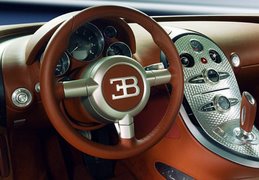
The only sacrifices: You give up 2.8 cubic feet of cargo space (leaving 11.2) to make room for the traction battery and its ventilation system; the rear backrest no longer folds forward for access to the trunk; and the spare tire is replaced by a small air compressor and a can of sealant (Honda pioneered this approach to repairing flats on the original NSX). And, of course, you get whacked by something over three grand on the sticker, too.

Except for this small array of unusual graphics in the cluster, there's little about this car to say it's a hybrid, or that it's the best Accord. There's a small "hybrid" badge on the decklid, less conspicuous than the V-6 emblem below it, a token decklid spoiler, special five-spoke alloy wheels, a different grille color, and tires upsized one notch to 215/60R-16. The eye is hardly grabbed.

During our summer test motoring, the A/C was always running. The belt-drive compressor (75cc displacement) stops with the engine, but the electric compressor (15cc) maintains cabin coolness and keeps the Accord alive with enough vibration that you could think—in a Lexus anyway—the engine were still idling.

The 2997cc V-6 has a system to deactivate all the valves on the rear bank. It's programmed to shrink back to three-cylinder operation below 3500 rpm when cruising or coasting, and the others don't come alive even for mild acceleration. Instead, the electric motor readily and seamlessly kicks in to help.

The mechanical layout is typical of Honda hybrids, with a thin wafer of a motor/generator (Honda calls it Integrated Motor Assist) sandwiched between the sideways engine and transmission. The five-speed automatic was shortened by 2.4 inches to allow room between the frame rails for the extra 2.7 inches of the IMA.

We tried a full-power launch one morning on damp—but definitely not wet—pavement; the tires stayed on the squealing side of full traction all the way to 30 mph.

The IMA, of course, changes its act to become a generator on deceleration, acting as a brake and sending the recaptured energy back to the battery. Progress keeps coming. Honda says the 2005 Accord's regen efficiency is 95.2 percent, up from the 2003 hybrid Civic's 93.5 percent.

This Honda's hybrid machinery is relatively simple, but a densely wound motor and an Ni-MH battery pack of 13.8 kilowatt-hours add pounds. To at least partly offset the gains, the hybrid substitutes aluminum for the hood, bumper beams, and rear suspension uprights; magnesium for the intake manifold and head cover; and remember, there's no spare tire.

The usual question about hybrids—"Can you save enough gas to pay back the extra initial cost?"—doesn't apply here.

Thursday, July 5, 2007

Honda Civic Hybrid

Honda Civic Hybrid - In a hybrid, the trick is to drive like a grandmother. You have to accelerate away from a stop slowly enough to minimize the role of the gasoline engine and maximize the role of the electric motor. Very simply, hybrids use an electric motor as a supporting source of power that doesn’t require gasoline, and that’s the whole point.

Since the electric motor and the gas engine rotate inseparably, the Civic must cut off fuel to the engine and use its variable-valve-timing system to close the engine’s valves and make it easier for the electric motor to do its job. The Civic’s only giveaway that it’s running on electricity alone is the digital bar graph that lights up suddenly when juice is being sent to the motor. So it might not have the beans to get the Civic going from a stop, but the 20-hp electric motor does have enough gusto to keep the car moving at low speeds—all by itself, if only briefly.

The Civic has a digital display that shows how much electricity you’re sending to the battery or how much you’re using up. Brake moderately hard, and you’ll light up the maximum number of green LEDs. Hit the brake pedal harder, and you’ll activate the conventional brakes, just as you would in any other car. It’s a challenge to send the maximum amount of charge without employing the traditional brakes.

The EPA testifies that the Civic hybrid gets 49 mpg in city driving and 51 on the highway. But those numbers are rarely achieved. To get mileage in the high-40-mpg range requires gradual acceleration, timid cruising speeds, and cautious use of the throttle. Suffer a short lapse in concentration or accelerate immoderately, and fuel economy will suffer. Fact is, to do this right, you will drive more slowly than you ever have.

Despite many improvements and tweaks, the new Civic hybrid’s powertrain remains physically and philosophically similar to that of the first car. What is radically new is the Civic’s interior and exterior. The last Civic was a homely-looking car; the new car’s styling stands out, for better or worse. From the B-pillar forward, it has almost a minivan look to it. The large windshield sits back at a rakish angle, and the hood appears to be at least twice as wide as it is long. From the B-pillar back, the Civic is modern but traditional. Perhaps we’ll get used to it, but that front end looks pretty strange.

At least the interior feels far more spacious than the previous Civic’s, even though the new car can boast only a minor one-cubic-foot gain in space. Despite a 3.2-inch increase in wheelbase, rear-seat legroom is down by 1.4 inches (overall rear space remains at 39 cubic feet, and the floor is still flat). But from behind the wheel it feels like the interior has grown by more than a cubic foot because of increased shoulder room and an airy feel due to the expansive windshield.

Driveline noises aside, the Civic hybrid is 4 dBA quieter at a 70-mph cruise than the previous car. The ’06 has refinement that was lacking before. The new body is stiffer, and the revised suspension smothers bumps easily and quietly.

Compared with last year’s Civic hybrid equipped with the optional CVT, it now costs about $1000 more. That seems like a small premium to pay for a car that’s faster, more refined, and more fuel efficient than the one it replaces.
eXTReMe Tracker